Description
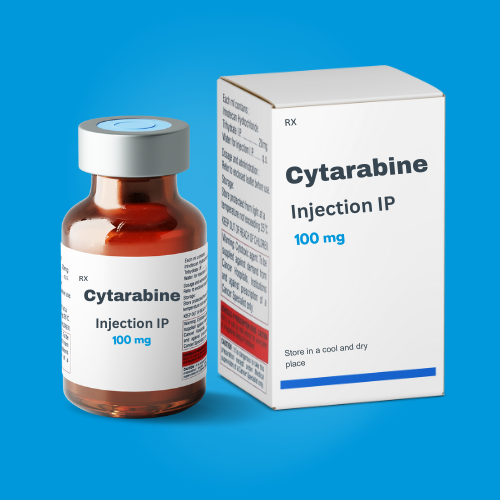
Cytarabine Injection USP – 100 mg / 500 mg / 1000 mg
Antimetabolite and an antineoplastic agent.
Overview:
Cytarabine (also known as Ara-C) is a potent antineoplastic agent belonging to the antimetabolite class of chemotherapy drugs. It works by inhibiting DNA synthesis, effectively interfering with the growth and multiplication of cancer cells. Supplied in sterile injectable form, it is available in 100 mg, 500 mg, and 1000 mg strengths to accommodate individualized dosing regimens.
Cytarabine is a cornerstone in the treatment of hematological malignancies. The Indian Pharma serves as a trusted supplier, exporter, and contract manufacturer, offering both generic and brand-name options to meet global demand.
Therapeutic Indications:
Cytarabine is indicated for the management and treatment of:
- Acute Myeloid Leukemia (AML) – First-line chemotherapy agent.
- Chronic Myelogenous Leukemia (CML) – Used in combination protocols.
- Meningeal Leukemia – For intrathecal administration to treat or prevent leukemic involvement of the central nervous system (CNS).
Bulk & Institutional Supply:
The Indian Pharma specializes in high-volume, compliance-driven supply for:
- Hospitals & Cancer Centers
- Healthcare Professionals (HCPs)
- Government Tenders & NGOs
- Distributors & Wholesalers
Supply Capabilities:
- Contract Manufacturing: Custom formulations and private labeling available.
- Export Documentation: Complete documentation support for CoA (Certificate of Analysis), Certificate of Pharmaceutical Product (CoPP), Free Sale Certificate (FSC), and GMP (Good Manufacturing Practices) certifications.
- Packaging: Available in vials (single-dose and multi-dose) with tamper-evident seals.
Logistics & Shipping:
- Temperature-Controlled Shipping: 2°C to 8°C cold chain management to ensure integrity during transit.
- Global Reach: Expedited shipping to North America, Europe, MENA, Africa, Latin America, and Asia-Pacific via air freight.
- Customs Compliance: Full support in customs clearance.
For Healthcare Professionals (HCPs):
Cytarabine is frequently administered as a continuous infusion or intrathecally. It is often used in combination with other chemotherapeutic agents (e.g., daunorubicin or idarubicin) to enhance efficacy in AML protocols.
Pharmacodynamics:
- Mechanism of Action: Cytarabine is converted into cytarabine triphosphate, which competes with deoxycytidine triphosphate for incorporation into DNA, leading to chain termination and cell death (specifically during the S-phase of the cell cycle).
Important Safety Information:
- Contraindications: Hypersensitivity to Cytarabine or any excipients.
- Monitoring: Requires close monitoring for myelosuppression (neutropenia, thrombocytopenia), hepatic dysfunction, and hyperuricemia.
- Drug Interactions: Use with caution in patients on other nephrotoxic or hepatotoxic agents. Dose adjustments are required for patients with renal impairment or those undergoing dialysis.
Clinical Statistics:
- Efficacy in AML: High-dose Cytarabine (HiDAC) consolidation therapy has been shown to improve 5-year disease-free survival by 15–20% in adult patients under 60 years of age compared to standard-dose regimens (Source: Journal of Clinical Oncology).
- Global Demand: The global injectable chemotherapy market is projected to grow at a CAGR of 8.5% from 2024 to 2030, with Cytarabine remaining one of the top 20 generic oncology drugs by volume.
- Quality Assurance: In WHO prequalified facilities, sterility assurance levels (SAL) exceed 99.99% for lyophilized injectables, ensuring patient safety.
Patient Information & Support
Important: This information is for educational purposes. Always consult your oncologist or healthcare provider.
How Cytarabine Works:
Cytarabine is a chemotherapy drug that interferes with the growth of cancer cells, slowing their spread in the body. It is often given alone or combined with other chemotherapy medicines to improve treatment outcomes.
Precautions:
- Do not take if you are allergic to Cytarabine or any of its ingredients.
- Inform your doctor if you have:
- Liver problems or bone marrow suppression.
- Kidney disease (effects on patients with kidney failure require careful dose adjustment).
- Recent or current radiation therapy.
- Uric Acid Monitoring: Cytarabine may increase uric acid levels. Your doctor may prescribe allopurinol or hydration therapy to prevent kidney complications.
Side Effects & Management:
Like many chemotherapy drugs, Cytarabine may cause side effects. Medical supervision is essential to manage these safely.
- Common Side Effects: Nausea, vomiting, diarrhea, fever, and temporary hair loss.
- Serious Side Effects (Require Immediate Medical Attention):
- Allergic Reaction: Skin rash, itching, swelling of the face/throat, wheezing, or difficulty breathing.
- Neurotoxicity: Difficulty with coordination or balance.
- Myelosuppression: Increased risk of infection, easy bruising, or unusual bleeding.
Follow-Up:
Regular blood tests (CBC, liver function tests, and uric acid levels) are required to monitor your body’s response. Attend all scheduled check-ups to manage side effects and ensure the best possible outcome.
Why Choose The Indian Pharma?
| Feature | Benefit |
| Regulatory Compliance | WHO-GMP, PIC/S, EU-GMP certified manufacturing partners. |
| Supply Chain Reliability | 98.5% on-time delivery rate for international shipments. |
| Cost Efficiency | Competitive pricing for both generic and branded cytarabine. |
| Technical Support | Dedicated team for regulatory documentation and cold chain logistics. |
Ordering Information
The Indian Pharma is a leading Cytarabine Supplier, Exporter, and Contract Manufacturer in India.
- Product: Cytarabine Injection USP
- Strengths: 100 mg / 500 mg / 1000 mg vials
- MOQ (Minimum Order Quantity): Flexible for B2B (institutional) and retail (patient) requirements.
- Shipping: Worldwide delivery with real-time tracking.
Contact us today for a quote, bulk supply, or to discuss a contract manufacturing partnership.