Description
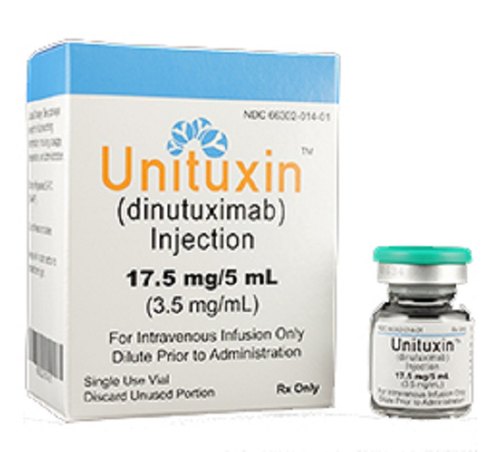
Uses of medication: Dinutuximab is used in order to treat high-risk neuroblastoma in the babies, children and adolescents aged 12 months to 17 years old.
Dosage: The recommended dinutuximab dose should be administered to you by a healthcare practitioner. It should be administered as a drip into your veins (intravenous infusion) with certain other medications.
Treatment Reactions: The most commonly reported dinutuximab side effects include:
- Pain
- Pyrexia
- Hypotension
- Hyponatremia
- Anemia
- Vomiting
- Diarrhea
- Hypokalemia
- Neutropenia
- Urticaria
- Hypoalbuminemia
- Hypocalcemia
- Thrombocytopenia
- Lymphopenia
- Capillary leak syndrome
- Infusion reactions
- Increased alanine aminotransferase
- Increased aspartate aminotransferase
Warnings and Precautions:
- Use of unituxin injection is contraindicated in those patients who are with a history of anaphylaxis to dinutuximab.
- Patients should be monitored closely for the signs/symptoms of infusion reactions while on and for a minimum 4-hours after the completion of each infusion of unituxin injection.
- Use of this medication should be promptly interrupted or permanently discontinued and institute supportive management in case of severe or prolonged infusion reactions.
- Prior to each Unituxin Dinutuximab Injection infusion, administer needed intravenous hydration, and patients should be closely monitored for blood pressure while on treatment.
- Patients should be monitored for the peripheral blood counts closely and serum electrolytes daily while on the dinutuximab injection therapy.
- Pregnant women are advised that use of this medication during pregnancy may cause fetal harm, so use should be avoided.
- Breastfeed needs to be avoided during treatment with dinutuximab injection. This is because this drug may pass into breast-milk.