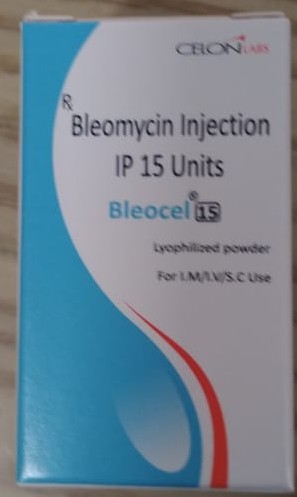
Description
Bleomycin and its uses:
BLEOMYCIN Sulfate should be considered a palliative treatment. It has been shown to be useful in the management of the following neoplasms either as a single agent or in proven combinations with other approved chemotherapeutic agents:
- Squamous Cell Carcinoma- Head and neck (including mouth, tongue, tonsil, nasopharynx, oropharynx, sinus, palate, lip, buccal mucosa, gingivae, epiglottis, skin, larynx), penis, cervix, and vulva.
- Lymphomas- Hodgkin’s disease, non-Hodgkin’s lymphoma.
- Testicular Carcinoma- Embryonal cell, choriocarcinoma, and teratocarcinoma.
- Malignant Pleural Effusion- BLEOCEL is effective as a sclerosing agent for the treatment of malignant pleural effusion and the prevention of recurrent pleural effusions.
Dosage:
Bleomycin should be given by intramuscular, subcutaneous, intrapleural or intravenous routes.
- Squamous cell carcinoma, non-Hodgkin’s lymphoma, testicular carcinoma: The recommended dose as 0.25 to 0.50 units/kg (10 to 20 units/m2) should be given intravenously, intramuscularly, or subcutaneously weekly or twice weekly.
- Hodgkin’s disease: The recommended dose as 0.25 to 0.50 units/kg (10 to 20 units/m2) should be given intravenously, intramuscularly, or subcutaneously weekly or twice weekly. After response of 50%, a maintenance dose of five units weekly or one unit daily can be recommended intramuscularly or intravenously.
- Malignant Pleural Effusion: The recommended dose of 60 units should be administered as a single dose bolus intrapleural injection.
Treatment Reactions:
The most commonly reported adverse reactions of bleomycin injection ip 15 units are as follows:
- interstitial pneumonitis
- pulmonary fibrosis
- laboured breathing
- loss of appetite
- weight loss
- nausea
- vomiting
- mucositis
- stomatitis
- inflammatory redness of the skin
- itching
- striae (stretch marks)
- blistering
- hyperpigmentation
- tenderness of the fingertips
- hyperkeratosis
- hair loss