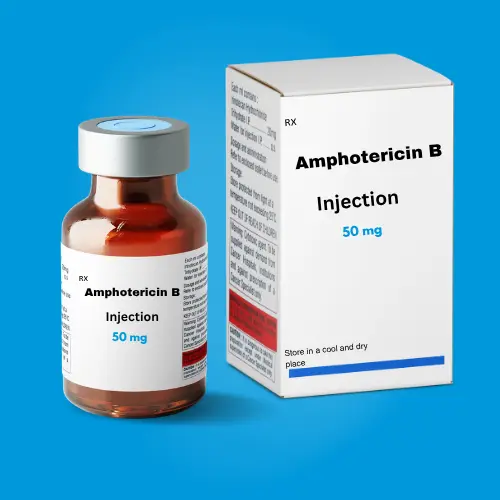
Ambilon — Amphotericin B
Amphotericin B has been a backbone systemic antifungal for decades, but its clinical relevance for our export business goes well beyond fungal infections — it remains a first-line treatment for visceral leishmaniasis, a parasitic disease with high endemic burden across parts of Africa and South Asia, which makes this product a strategically important line for distributors serving those specific regions rather than a general-purpose antifungal alone.
- Approved indications: Invasive fungal infections (aspergillosis, invasive candidiasis, cryptococcal meningitis), visceral leishmaniasis
- Mechanism: Binds ergosterol in fungal (and Leishmania parasite) cell membranes, creating pores that cause cell death
- Formulation distinction: Available as conventional (deoxycholate) and liposomal formulations — liposomal significantly reduces nephrotoxicity risk and is generally preferred when renal function is a concern, though at higher cost
- Regional demand driver: Leishmaniasis endemicity in specific African and South Asian markets is a meaningful, distinct driver of export demand separate from general antifungal use
Key Product Facts
50 mg
Strength
1 Vial
Pack Size
Amphotericin B
Active Ingredient
Antifungal
Category
Enquire Now for Pricing
Price
Amphotericin B has been a backbone systemic antifungal for decades, but its clinical relevance for our export business goes well beyond fungal infections — it remains a first-line treatment for visceral leishmaniasis, a parasitic disease with high endemic burden across parts of Africa and South Asia, which makes this product a strategically important line for distributors serving those specific regions rather than a general-purpose antifungal alone.
- Approved indications: Invasive fungal infections (aspergillosis, invasive candidiasis, cryptococcal meningitis), visceral leishmaniasis
- Mechanism: Binds ergosterol in fungal (and Leishmania parasite) cell membranes, creating pores that cause cell death
- Formulation distinction: Available as conventional (deoxycholate) and liposomal formulations — liposomal significantly reduces nephrotoxicity risk and is generally preferred when renal function is a concern, though at higher cost
- Regional demand driver: Leishmaniasis endemicity in specific African and South Asian markets is a meaningful, distinct driver of export demand separate from general antifungal use
- Nephrotoxicity: The primary safety concern with the conventional formulation — renal function monitoring required throughout treatment; liposomal formulation carries substantially lower risk
- Infusion reactions: Fever and chills during infusion are common, especially with conventional formulation — pre-medication is typically given
- Electrolyte monitoring: Regular potassium and magnesium monitoring recommended given known depletion risk
- Formulation clarification: Essential to confirm which formulation (conventional vs. liposomal) a buyer needs before quoting, since sourcing, pricing, and safety profile differ meaningfully between the two
| Document |
Included |
| Certificate of Analysis (COA) |
Standard |
| Certificate of Origin (COO) |
Standard |
| MSDS |
Standard |
Stock status: Available on request, both formulations | Quote turnaround: Confirm formulation, quantity, and destination for pricing
- Logistics: GDP-compliant cold-chain export
- Coverage: Global, with particular relevance to leishmaniasis-endemic markets in Africa and South Asia
- Tracking: Full shipment tracking included