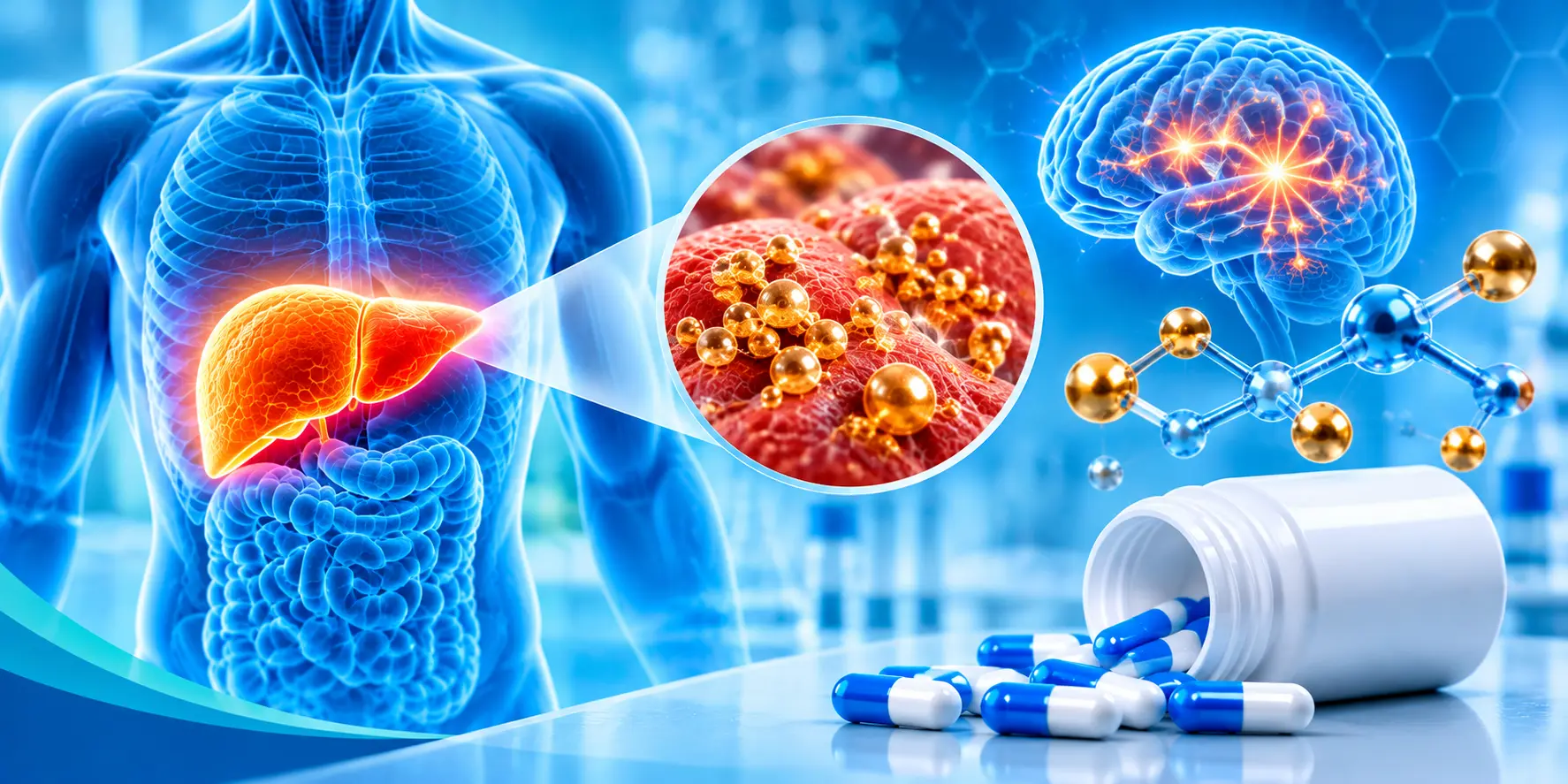
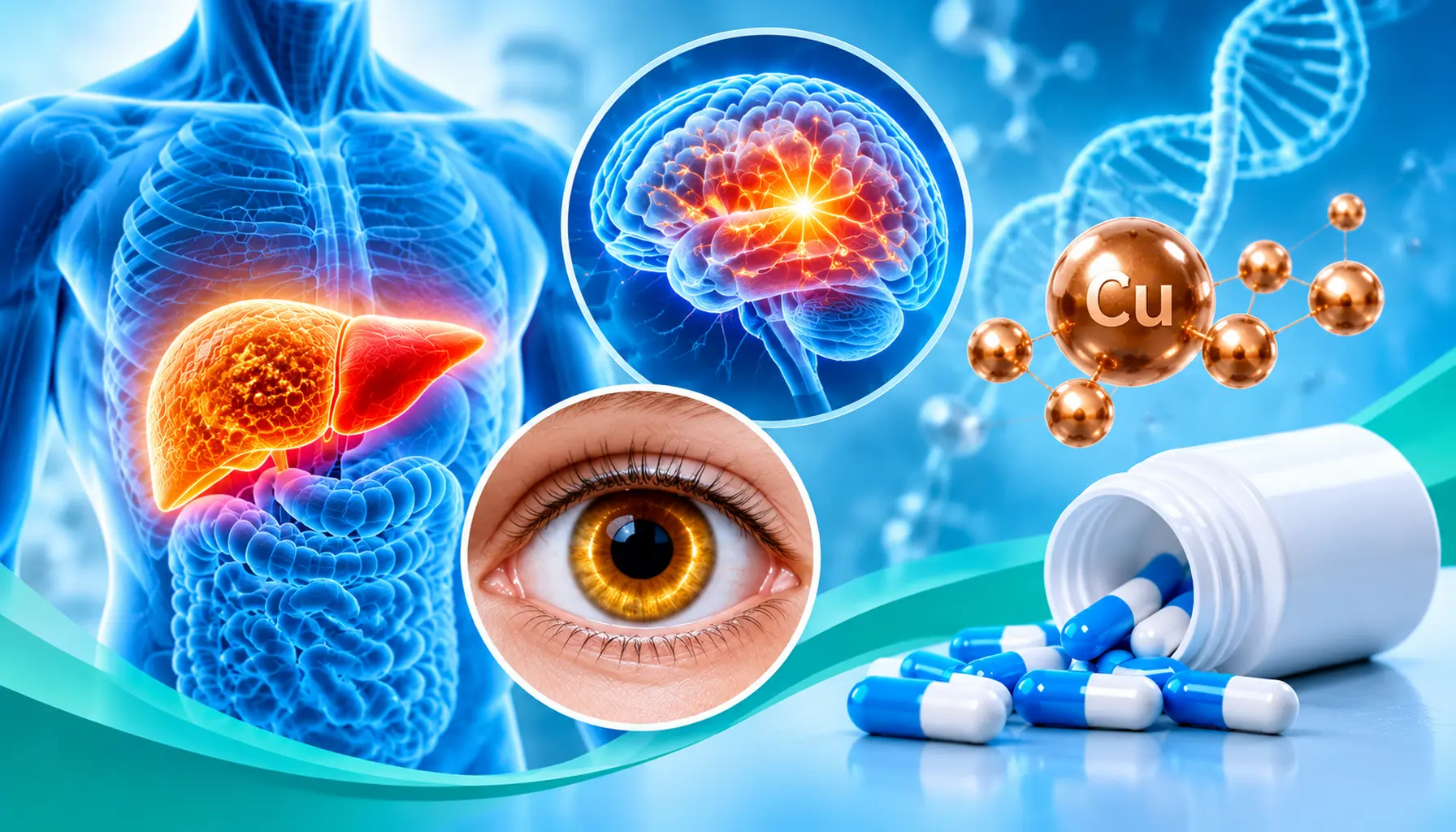
Wilson's disease is a rare inherited disorder that affects the body's ability to regulate and eliminate excess copper. When copper accumulates in the body, it can gradually damage vital organs, particularly the liver and brain. The condition may also affect the eyes, kidneys, heart and nervous system.
Early diagnosis and appropriate treatment are essential for managing Wilson's disease and preventing progressive organ damage. Although it is a lifelong condition, available medical treatments can help control copper accumulation and support long-term disease management.
In this article, we explore the causes, symptoms, diagnosis and treatment options for Wilson's disease, including the role of copper-chelating medicines such as Trientine Hydrochloride.
What Is Wilson's Disease?
Wilson's disease, also known as hepatolenticular degeneration, is a rare genetic disorder that affects copper metabolism.
Copper is an essential trace mineral required for several biological processes, including energy production, iron metabolism and nervous system function. Under normal circumstances, the liver regulates copper levels and eliminates excess copper through bile.
In individuals with Wilson's disease, this process does not function properly. As a result, copper accumulates in the liver and may eventually deposit in other organs, including the brain and eyes.
The condition can cause liver disease, neurological complications and psychiatric symptoms if left untreated.
Wilson's disease is generally considered a lifelong condition that requires ongoing medical management.
What Causes Wilson's Disease?
Wilson's disease is caused by mutations in the ATP7B gene, which plays an important role in copper transport within liver cells.
The ATP7B gene provides instructions for producing a protein responsible for transferring copper and supporting its elimination through bile.
When this gene does not function correctly, the body cannot remove excess copper efficiently.
Genetic Inheritance of Wilson's Disease
Wilson's disease follows an autosomal recessive inheritance pattern.
This means an individual generally needs to inherit two altered copies of the ATP7B gene, one from each biological parent, to develop the condition.
When both parents are carriers of an ATP7B mutation, each pregnancy has:
-
A 25% chance of a child inheriting both altered copies and having Wilson's disease.
-
A 50% chance of a child inheriting one altered copy and being a carrier.
-
A 25% chance of a child inheriting neither altered copy.
People who carry one disease-associated ATP7B variant generally do not develop Wilson's disease themselves.
Because the condition is inherited, genetic counselling and appropriate screening may be important for family members.
What Are the Symptoms of Wilson's Disease?
The symptoms of Wilson's disease vary depending on the organs affected and the extent of copper accumulation.
Although the genetic condition is present from birth, symptoms may not become apparent until copper builds up in different tissues.
Some individuals initially experience liver-related symptoms, while others develop neurological or psychiatric manifestations.
1. Liver-Related Symptoms
The liver is commonly affected because it plays a central role in copper metabolism.
Possible symptoms and complications include:
- Fatigue and weakness.
- Nausea and vomiting.
- Loss of appetite.
- Abdominal discomfort.
- Jaundice.
- Hepatitis.
- Cirrhosis.
- Fluid accumulation in the abdomen.
In severe cases, Wilson's disease can lead to acute liver failure, which requires urgent medical assessment.
2. Neurological Symptoms
Excess copper may accumulate in the brain and affect normal neurological function.
Possible manifestations include:
- Hand tremors.
- Difficulty with coordination.
- Muscle stiffness.
- Problems with speech.
- Difficulty swallowing.
- Abnormal involuntary movements.
- Changes in walking and balance.
The severity of neurological symptoms can vary considerably between individuals.
3. Psychiatric and Behavioural Symptoms
Wilson's disease can also affect mental health and behaviour.
Possible manifestations include:
- Depression.
- Anxiety.
- Changes in personality.
- Irritability.
- Mood disturbances.
- Cognitive difficulties.
- Psychosis in some individuals.
Psychiatric symptoms may occasionally appear before the condition is recognised as a copper metabolism disorder.
4. Eye-Related Symptoms
One recognised eye manifestation is the Kayser-Fleischer ring.
These rings develop when copper accumulates around the outer edge of the cornea. They may appear golden, greenish or brownish.
A healthcare professional can examine the eyes using a specialised slit-lamp examination.
Kayser-Fleischer rings are particularly common in individuals with neurological manifestations, although their absence does not exclude Wilson's disease.
5. Other Possible Health Complications
Wilson's disease may also affect other body systems.
These complications can include:
- Haemolytic anaemia.
- Kidney abnormalities.
- Bone and joint problems.
- Osteoporosis.
- Cardiac abnormalities.
- Endocrine disturbances.
The clinical presentation differs between patients, making comprehensive medical assessment important.
How Is Wilson's Disease Diagnosed?
Diagnosing Wilson's disease requires a combination of clinical assessment, laboratory investigations and, when appropriate, specialised testing.
No single test is sufficient to confirm or exclude every case.
Healthcare professionals may use several diagnostic approaches.
1. Medical and Family History
The diagnostic process generally begins with a detailed medical history.
Doctors may assess:
- Previous liver-related problems.
- Neurological or psychiatric symptoms.
- Family history of Wilson's disease.
- Unexplained liver abnormalities.
- Relevant medical history of first-degree relatives.
Family history can provide important clues because Wilson's disease is inherited.
2. Serum Ceruloplasmin Test
Ceruloplasmin is a protein that carries copper in the bloodstream.
Many individuals with Wilson's disease have reduced serum ceruloplasmin levels.
However, a normal result does not completely exclude the condition, and a low result alone does not establish the diagnosis.
3. Blood Copper and Liver Function Tests
Blood investigations may include:
- Total serum copper.
- Serum ceruloplasmin.
- Alanine aminotransferase (ALT).
- Aspartate aminotransferase (AST).
- Bilirubin.
- Other relevant liver function markers.
These tests help assess copper metabolism and identify possible liver involvement.
4. 24-Hour Urinary Copper Test
A 24-hour urine collection is commonly used to measure copper excretion.
Increased urinary copper may support the diagnosis of Wilson's disease, particularly when considered alongside clinical findings and other laboratory results.
The results must be interpreted according to the patient's age, clinical condition and treatment status.
5. Eye Examination
A slit-lamp examination helps identify Kayser-Fleischer rings.
This examination is especially useful when neurological manifestations are present.
However, not every individual with Wilson's disease develops visible Kayser-Fleischer rings.
6. Genetic Testing
Genetic testing can identify disease-associated variants in the ATP7B gene.
It may help confirm a suspected diagnosis and support family screening.
7. Liver Biopsy and Imaging
In selected cases, doctors may recommend additional investigations.
These may include:
- Liver biopsy to measure hepatic copper concentration.
- Liver imaging to assess structural abnormalities.
- Neurological imaging when clinically indicated.
The final diagnosis is generally established through a combination of clinical and biochemical findings, sometimes supported by genetic testing.
What Are the Treatment Options for Wilson's Disease?
Wilson's disease requires long-term management to control excess copper and reduce the risk of organ damage.
Treatment selection depends on the patient's symptoms, disease severity, organ involvement and clinical response.
Available approaches include copper-chelating medicines, zinc-based therapy and, in selected severe cases, liver transplantation.
1. Copper Chelation Therapy
Copper chelation therapy involves medicines that bind excess copper and facilitate its removal from the body.
Two established chelating agents used in Wilson's disease management are:
D-Penicillamine
D-Penicillamine is a copper-chelating medicine that increases urinary copper excretion.
It is one of the established treatment options for Wilson's disease, although some patients may experience adverse effects or intolerance.
Trientine Hydrochloride
Trientine Hydrochloride is another copper-chelating medicine used in the management of Wilson's disease.
It binds copper and facilitates its elimination, primarily through urinary excretion.
Trientine may be considered in patients who cannot tolerate D-Penicillamine or in other appropriate clinical situations determined by the treating physician.
2. Zinc-Based Therapy
Zinc is another treatment option for Wilson's disease.
It works differently from copper-chelating medicines by reducing the absorption of copper from the gastrointestinal tract.
Depending on the patient's clinical condition, zinc may be used in selected treatment settings, including maintenance management.
3. Liver Transplantation
In severe cases involving acute liver failure or advanced liver disease with liver failure, liver transplantation may be necessary.
The decision requires specialised assessment by an appropriate transplant team.
Understanding the Role of Trientine in Wilson's Disease
Trientine is an important medicine in the management of Wilson's disease because of its copper-chelating properties.
It helps bind excess copper and facilitates its elimination from the body.
The American Association for the Study of Liver Diseases (AASLD) includes Trientine among the recommended chelating agents for initial treatment of symptomatic Wilson's disease.
The medicine may also be used in other treatment settings based on clinical response and the patient's individual requirements.
Trientine Hydrochloride 250mg Capsules
Trientine Hydrochloride is available in specific pharmaceutical formulations depending on the manufacturer and market.
The Indian Pharma lists the following product presentation:
- Product name: Triokris.
- Active ingredient: Trientine Hydrochloride.
- Strength: 250mg.
- Dosage form: Capsules.
- Pack presentation: 100 capsules, as listed on the product page.
- Therapeutic category: Rare disease medicine.
For product specifications, sourcing information and international pharmaceutical procurement enquiries, visit:
Explore Triokris – Trientine Hydrochloride 250mg Capsules
Product availability, manufacturer details, regulatory status and documentation should be verified for the intended destination market before procurement.
Importance of Long-Term Management and Monitoring
Wilson's disease requires lifelong medical management.
Even when symptoms improve, continued treatment and regular clinical monitoring remain important.
Healthcare professionals may monitor:
- Liver function.
- Blood counts.
- Urinary copper levels.
- Serum copper and ceruloplasmin trends.
- Neurological symptoms.
- Medication adherence.
- Potential treatment-related adverse effects.
Patients should not independently stop, change or adjust their prescribed treatment.
Consistent follow-up helps healthcare professionals evaluate treatment response and identify potential complications.
Pharmaceutical Sourcing and Access to Rare Disease Medicines
Access to rare disease medicines involves several pharmaceutical supply chain considerations.
International buyers, including pharmaceutical distributors, importers, hospitals and institutional procurement organisations, may need to verify product specifications and regulatory documentation before placing procurement requests.
Important considerations include:
- Active pharmaceutical ingredient and strength verification.
- Dosage form and pack presentation.
- Manufacturer identification.
- Product-specific quality documentation.
- Batch and expiry information.
- Destination-country import requirements.
- Appropriate storage and transportation conditions.
The Indian Pharma, operated by Ikris Pharma Network Pvt. Ltd., provides pharmaceutical sourcing and export coordination services for international buyers.
For Trientine Hydrochloride product information and procurement enquiries, buyers can visit the dedicated product page.
Conclusion
Wilson's disease is a rare inherited disorder that affects copper metabolism and can cause serious complications involving the liver, brain, eyes and other organs.
Early diagnosis, appropriate medical treatment and consistent monitoring are essential for long-term disease management.
Treatment options include copper-chelating medicines such as Trientine Hydrochloride and D-Penicillamine, as well as zinc-based therapy in appropriate clinical situations.
Understanding the causes, symptoms, diagnosis and available treatment approaches can help improve awareness of this rare metabolic disorder.
For product-specific information and international pharmaceutical procurement enquiries, explore Triokris – Trientine Hydrochloride 250mg Capsules through The Indian Pharma.