

Wilson's disease is a rare inherited metabolic disorder that affects the body's ability to regulate copper. When copper accumulates in different organs, particularly the liver and brain, it can lead to serious health complications. Early diagnosis and appropriate medical management are important for individuals living with this condition.
Trientine Hydrochloride is a copper-chelating medicine used in the management of Wilson's disease. It helps the body eliminate excess copper and supports the management of copper accumulation under medical supervision.
In this article, we explore what Trientine Hydrochloride is, how it works, its medical applications, its role in copper chelation therapy and important pharmaceutical product considerations.
What Is Trientine Hydrochloride?
Trientine Hydrochloride is a prescription medicine classified as a copper chelating agent. It is used in the treatment of Wilson's disease, a genetic condition in which the body cannot properly eliminate excess copper.
Copper is an essential trace mineral required for several biological functions. However, excessive copper accumulation can damage organs and tissues.
Trientine works by binding to copper in the body, helping facilitate its elimination through urine. It is an established treatment option for patients with Wilson's disease when prescribed by an appropriate healthcare professional.
What Is Wilson's Disease?
Wilson's disease is an inherited autosomal recessive disorder associated with mutations in the ATP7B gene.
This gene plays an important role in copper metabolism, particularly in copper transport and biliary copper excretion.
When the ATP7B gene does not function properly, copper cannot be eliminated efficiently. As a result, copper may accumulate in the liver, brain, eyes and other tissues.

Common Features of Wilson's Disease
Clinical manifestations vary from patient to patient. They may include:
- Liver-related problems, including hepatitis and cirrhosis.
- Neurological symptoms, such as tremors and difficulties with coordination.
- Psychiatric and behavioural changes.
- Kayser-Fleischer rings, which are copper deposits around the cornea.
- Fatigue and other systemic symptoms.
Early recognition is important because untreated copper accumulation can cause progressive organ damage.
How Does Trientine Work in the Body?
Trientine Hydrochloride works through a process known as copper chelation.
A chelating agent binds to specific metals and forms complexes that can be eliminated from the body.
In the case of Trientine, the medicine binds copper and forms a stable complex that is primarily excreted through urine.
Mechanism of Action of Trientine
The mechanism involves several important steps:
- Trientine is administered according to the prescribed treatment regimen.
- The active chelating agent binds to copper in the body.
- Copper-trientine complexes are formed.
- These complexes facilitate copper elimination through urinary excretion.
By reducing excess copper accumulation, Trientine supports the long-term management of Wilson's disease.
Treatment response and copper levels require regular monitoring by healthcare professionals.

Medical Uses of Trientine Hydrochloride
The primary medical use of Trientine Hydrochloride is the management of Wilson's disease.
It may be prescribed in specific clinical situations, including:
- Patients requiring copper chelation therapy.
- Patients with Wilson's disease who cannot tolerate certain alternative treatments.
- Patients requiring an alternative copper-chelating medicine based on their clinical condition.
The suitability of Trientine depends on individual medical history, disease severity, previous treatment response and the prescribing physician's assessment.
It should not be used without a valid prescription and appropriate medical supervision.
Trientine and Copper Chelation Therapy
Copper chelation therapy is an important part of the medical management of Wilson's disease.
The objective is to reduce excessive copper levels and prevent further accumulation in vital organs.
Trientine is one of the medicines used for this purpose. Other treatment approaches may include different copper-chelating agents and zinc-based therapies, depending on the patient's condition.
Trientine vs Penicillamine
Trientine and Penicillamine are both copper-chelating medicines used in Wilson's disease management.
However, they differ in their chemical structure, pharmacological characteristics and adverse-effect profiles.
The selection between these medicines depends on individual clinical circumstances. A healthcare professional should determine the appropriate treatment option.
Trientine Hydrochloride 250mg Capsules
Trientine Hydrochloride is available in different product presentations depending on the manufacturer and market.
One product presentation listed by The Indian Pharma is:
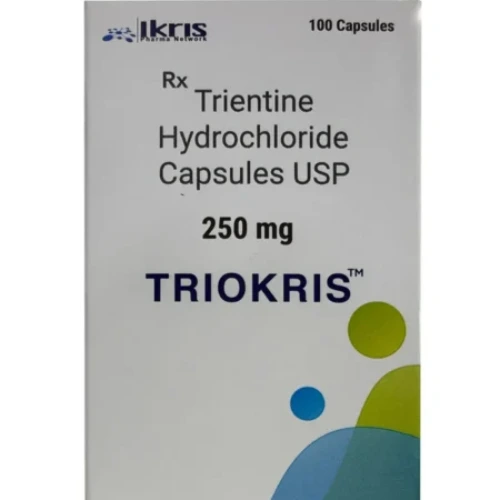
Triokris – Trientine Hydrochloride 250mg Capsules
Product information:
- Product name: Triokris
- Active ingredient: Trientine Hydrochloride
- Strength: 250mg
- Dosage form: Capsules
- Pack presentation: 100 capsules, as listed on the product page
- Therapeutic category: Rare disease medicine
For product specifications, sourcing information and international pharmaceutical procurement enquiries, visit the dedicated product page:
Explore Triokris – Trientine Hydrochloride 250mg Capsules
Product availability, manufacturer details, market-specific approvals and documentation should be confirmed before procurement.
Important Safety Information and Side Effects
Trientine Hydrochloride is a prescription medicine and should be used only under appropriate medical supervision.
Potential adverse reactions may include:
- Gastrointestinal discomfort.
- Abdominal pain.
- Anaemia and other haematological abnormalities.
- Skin-related reactions.
- Iron deficiency in some patients.
The exact safety profile depends on the individual patient and clinical circumstances.
Patients may require periodic monitoring of copper levels, blood parameters and other relevant clinical indicators.
Trientine may also interact with certain minerals and other medicines. Patients should follow their prescribing physician's instructions regarding administration and dietary or medication restrictions.
This information is educational and does not replace professional medical advice or the approved prescribing information.
Pharmaceutical Sourcing and Product Information
Access to specialty and rare disease medicines requires careful pharmaceutical sourcing, product verification and regulatory coordination.
International pharmaceutical buyers, including distributors, importers, hospitals and institutional procurement teams, may need to evaluate several factors before sourcing a medicine.
Important procurement considerations include:
- Verified manufacturer and product details.
- Strength, dosage form and pack presentation.
- Product-specific regulatory documentation.
- Batch and expiry information.
- Destination-country import requirements.
- Storage and transportation conditions.
- Supplier credentials and quality documentation.
The Indian Pharma, operated by Ikris Pharma Network Pvt. Ltd., provides pharmaceutical sourcing and export coordination services for international buyers.
For Trientine Hydrochloride product information and procurement enquiries, buyers can contact The Indian Pharma through its official website.
Conclusion
Trientine Hydrochloride is an important copper-chelating medicine used in the management of Wilson's disease. By facilitating the elimination of excess copper, it plays a valuable role in the long-term management of this rare inherited metabolic disorder.
Understanding its mechanism of action, medical applications, safety considerations and pharmaceutical sourcing requirements is important for both healthcare professionals and the pharmaceutical supply chain.
For product-specific information and international procurement enquiries, explore Triokris – Trientine Hydrochloride 250mg Capsules at The Indian Pharma.