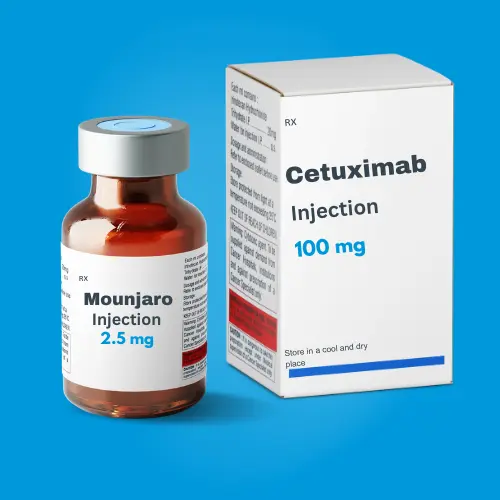
Cetuximab is one of the clearer examples in oncology of precision medicine in practice — its effectiveness depends entirely on the genetic makeup of a patient's tumor, specifically the RAS gene status, and prescribing it without that confirmation is both clinically inappropriate and a genuine risk of treatment failure. It works by blocking EGFR, a receptor that many colorectal and head & neck cancers rely on for growth signaling, but only in tumors where the downstream RAS pathway hasn't independently mutated to bypass EGFR blockade entirely.
- Approved indications: Metastatic colorectal cancer (RAS wild-type tumors only), locally advanced or recurrent/metastatic head and neck squamous cell carcinoma
- Mechanism: Binds and blocks EGFR (epidermal growth factor receptor), interrupting growth-signaling pathways cancer cells depend on
- Critical prescribing requirement: RAS mutation testing is mandatory before initiating treatment for colorectal cancer — RAS-mutant tumors show no clinical benefit and combining Cetuximab with oxaliplatin-based chemotherapy in this population is specifically contraindicated due to worse outcomes observed in trials
- Combination therapy: Typically combined with chemotherapy (FOLFIRI regimens in colorectal cancer) or radiation therapy (in head and neck cancer)
- Biomarker prerequisite: RAS wild-type status must be confirmed via tumor genetic testing before treatment — this is a hard clinical requirement, not a recommendation, and distributors should confirm the receiving facility has access to this testing before finalizing large orders
- Infusion reactions: Can range from mild to severe (including anaphylaxis); pre-medication and close monitoring during the first infusion are standard practice
- Interstitial lung disease: Rare but serious risk requiring immediate discontinuation if respiratory symptoms develop
- Dermatologic toxicity: Acneiform skin rash is a very common side effect, generally correlated with treatment response but requiring proactive management
- Restrictions: Not established for use in children; not recommended in pregnancy
- Certification: WHO-GMP sourced manufacturing partners
- Batch-specific testing: EGFR-binding potency validated per batch before release
- Buyer guidance: We routinely confirm with new distributors and hospital buyers whether RAS-testing infrastructure is available at the treating facility, since ordering without that confirmation risks stock going unused
| Document |
Included |
| Certificate of Analysis (COA) |
? Standard |
| Certificate of Origin (COO) |
? Standard |
| MSDS |
? Standard |
Stock status: Available per shipment, standard lead time
- Logistics: GDP-compliant cold-chain export (2–8°C)
- Coverage: Global export markets
- Tracking: Full shipment tracking included
- Institutional buyers: Hospital and distributor procurement support, particularly relevant for cancer centers with established genetic-testing infrastructure
- Unregistered markets: Named-patient supply pathway available
What is Cetuximab used for?
Treats metastatic colorectal cancer (RAS wild-type only) and head & neck squamous cell cancer.
Get Cetuximab price from a GMP-compliant Indian supplier — how?
Send required quantity and destination for a quote.
Does it work for all colorectal cancer patients?
No, only RAS wild-type tumors respond — genetic testing confirmation is required before treatment.
Can it be combined with chemo?
Yes, commonly combined with chemotherapy or radiation, though not with oxaliplatin-based regimens in RAS-mutant tumors.
Who exports Cetuximab from India?
WHO-GMP certified supplier with full documentation.